These 4 goals aim to improve Jackson, redefine ‘Prison City’ in next 20 years
By Chloe Miller | cmiller@mlive.com
February 12, 2026
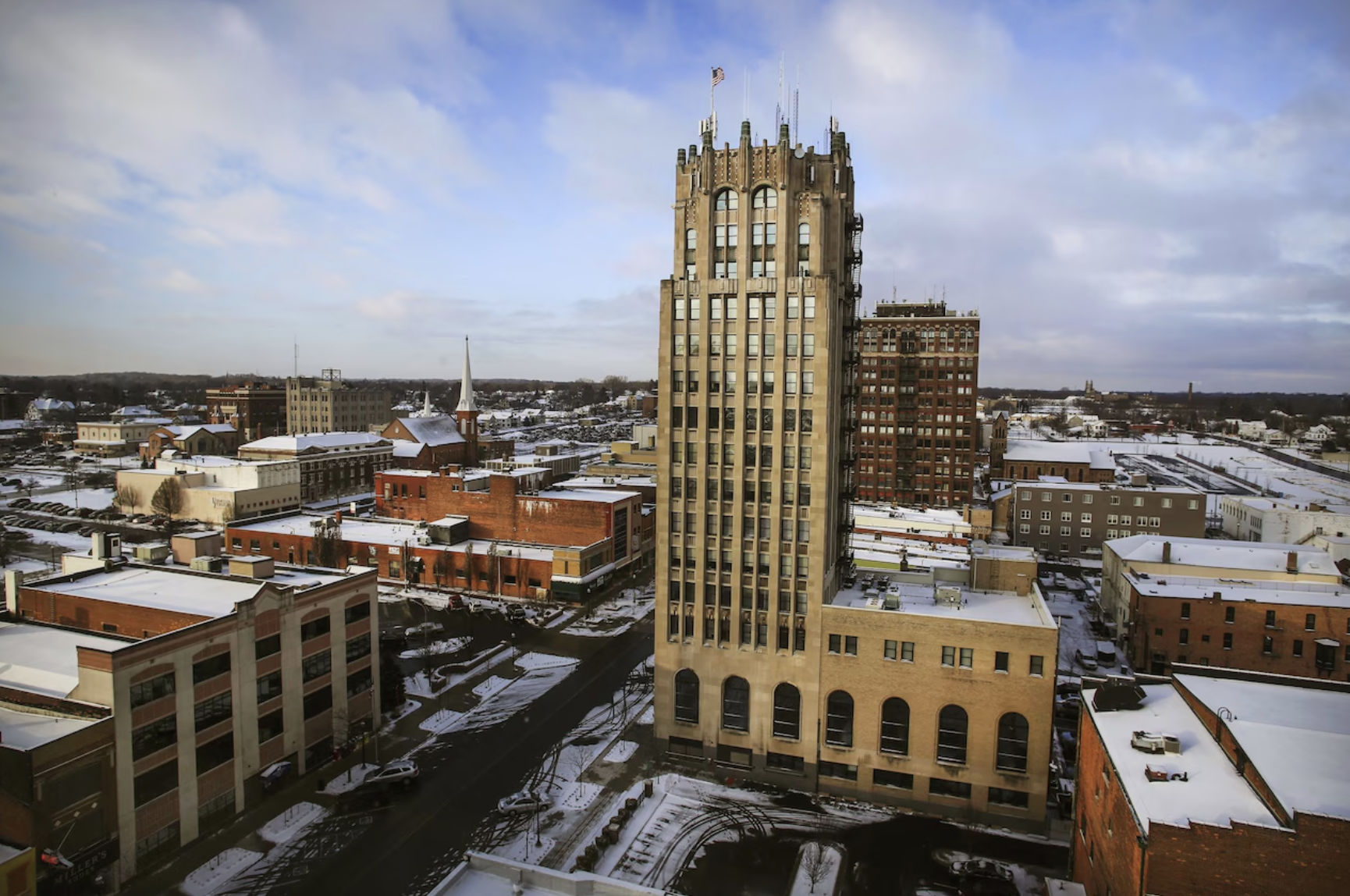
The Jackson County Tower Building glows in morning sunlight on Friday, Jan. 6, 2017. (Emily Mesner | Mlive.com) MLive Media Group Mitchell Kukulka
JACKSON COUNTY, MI — The Jackson County Chamber of Commerce unveiled its 20-year vision plan Wednesday, Feb. 11, aimed at attracting and retaining residents, while shaping the area as more than just “Prison City.”
Over the last year, the chamber worked with Accelerate Jackson County, Experience Jackson, the Jackson Community Foundation, the city of Jackson, Jackson County and other private investments to develop Drive Jackson.
The initiative gathered feedback from over 1,300 residents, local government and businesses throughout the county. The 70-page strategic plan was developed by a 24-person committee, outlining four goal categories and 54 focus areas to guide the county through 2045.
“People in Jackson County have an incredible love for their community, whether it’s the lakes, the outdoor activities, but we saw areas and said, ‘We can improve this,’” said Ryan Tarrant, President and CEO, Jackson County Chamber of Commerce and Experience Jackson.
Here is a glance at those main goals:
Goal A: Improve quality of place and identity
According to the vision plan, Goal A focuses on strengthening Jackson County as a place that supports resident well-being, fosters pride and attracts talent, businesses and visitors.
Residents identified a need to expand current amenities with year-round ones, specifically winter and indoor activities. The plan emphasizes investing in all-season facilities and programming, expanding trail connectivity and biking infrastructure, positioning the county as a destination.
It also notes reinvestment in main streets, support for local entrepreneurs and the pursuit of a downtown hotel and conference center to increase foot traffic and regional visibility.
Preserving historic buildings and improving public spaces with decorative crosswalks, public art installations and alley activation were listed. As well as to explore opportunities to expand regional transportation by bus, rail and air to support workforce mobility and tourism.
According to the strategic plan, success under this goal would include increased tourism, new and improved recreational spaces, higher residential satisfaction and greater investment in infrastructure.
Goal B: Invest in education and learning
The second goal centers around strengthening education by improving educational outcomes for young people and aligning education with workforce needs.
Strategies include improving education by addressing non-academic barriers, like mental health and food insecurity, and strengthening partnerships with employers to better prepare students for college or careers.
The plan promotes lifelong learning opportunities by expanding workforce and adult education programs, financial literacy education and establishing mentorship and networking opportunities for young residents. Higher education and vocational projects would be aligned with regional job needs to prepare residents for in-demand careers.
Success would be measured through increased enrollment in trade programs and workforce training, availability of affordable child care, higher educational attainment and more students finishing workforce training programs.
Goal C: Strengthen housing and economic vitality
Goal C focuses on workforce development, housing availability and business growth to ensure residents at all income levels can “live, work and succeed locally,” according to the vision plan.
Strategies for this goal include enhancing the quality of the local workforce by aligning with statewide industry initiatives like training partnerships and business tax credits.
Other strategies include promoting, retaining and attracting businesses to the county through funding, technical assistance and by creating a small business incubation hub to support new businesses. The plan also detailed retaining larger employers through tailored support, communication and initiatives that address their operational challenges.
This goal outlines a need to increase housing diversity in the county by rehabilitating current homes and offering a wider range of housing types, like duplexes, triplexes, accessory dwelling units and tiny homes.
The vision plan emphasized supporting affordable housing initiatives and developing incentives for landlords to rent to residents with previous evictions.
Tarrant touched on the city of Jackson’s 100 Homes program as a good example.
“We hear a lot about affordable housing, it’s really across the board,” Tarrant said. “We had Lt. Gov. Garlin Gilchrist in and one of the questions somebody asked was on housing. What he said was if you don’t have million-dollar homes, the person that can afford that million-dollar home is going to drop into that next category, and eventually at the bottom, people are going to get pushed out.”
The plan also includes developing expansion-ready sites and prioritizing redevelopment of brownfield properties, sites of former industry that could have some pollution or contamination.
Success indicators for this goal include growth in median household income, growth in career-level jobs, increased number of small business startups and survival rates, and an increase in the number of new housing units built.
Goal D: Foster a safe and healthy community
Goal D is about enhancing public safety and expanding access to health and wellness resources.
Proposed strategies include improving infrastructure along streets and intersections with sidewalks, crosswalks and lighting to make it safer for users, while reducing opportunities for crime. Tarrant outlined creating a downtown safety ambassador program, similar to one in Columbus, Ohio.
“These safety ambassadors will walk downtown employees to their car, they will give directions,” Tarrant said. “Just having their mere presence has helped make it more safe.”
Additional notes include improving communication between services and the community by creating a centralized, 211-connected website and one-stop social services hub for residents seeking assistance.
Additionally, the vision plan mentions expanding substance use recovery services, including recruiting a local inpatient treatment facility to reduce barriers to care.
It also emphasizes improving community health by ensuring access to healthy food through transportation to grocery stores, expanded food pantry options and community-based initiatives like gardens, mobile markets and food hubs.
Success measures include reducing crime rates, decreasing the number of residents who lack adequate access to food and increasing the ratio of population to primary care physicians.
Next Steps
After revealing the Drive Jackson vision plan, it will now enter its implementation phase, which will require long-term collaboration, Tarrant said.
A new Drive Jackson Vision Council was announced. It will guide and implement the plan and monitor progress.
“I’ve always said this was the down payment,” Tarrant said. “Now, the hard work and the investment begin.”
A formal review of the plan should be considered every five years to incorporate new data, other relevant changes and work going on in the community, according to the strategic plan.
“One of the things with this plan is that it is breathable,” Tarrant said.
The full plan can be viewed online here.
Source: MLive
This article and accompanying content are the property of MLive and are shared here for informational purposes only. All rights and ownership remain with MLive.
Original story: https://www.mlive.com/news/jackson/2026/02/these-4-goals-aim-to-improve-jackson-redefine-prison-city-in-next-20-years.html